Club Culture in Guwahati
It was the last decade of the 19th century when club culture had started to grow up in Guwahati. Here is a journey down memory lane.
Though the British left this country but impression and impact of the raj continued through the institutions they left behind. They established educational institutions, spread football and other modern games and founded clubs to make their presence felt among people. They instituted clubs with the purpose of providing congenial surroundings where they could meet and exchange pleasantries among themselves.
The term club is usually applied to a particular organization of people who are tied by common interest. As humans, our primary need is to stay connected and clubs are one place where we can meet like-minded people and exchange ideas and thoughts while having a 'good' time. At the time of British raj, some clubs excluded natives and admission was restricted only to the British or white people. Naturally, the British who introduced the club culture in Gauhati can claim to be the one who heralded a club culture in the region.
Even though the British planted their feet formally in Assam after the Yandaboo Treaty in 1826, club culture took place in 1894 when Gauhati European Club was established. Soon after, few more clubs were established in Gauhati. It is claimed that the first club outside Britain was perhaps the Calcutta Cricket and Football Club (CC&FC) established in the year 1792. A year later, Calcutta Racket Club was established. Some of the oldest Indian clubs are Cochin Club (1821), Madras Club (1832), Bangalore Club (1868), Secunderbad Club (1878), Coonoor Club (1885) and Kodaikanal Club (1887).
So, club culture in Gauhati emerged a century after the first club was established. But it did not take too long for non-sahibs to become part of it, in Gauhati. Yet, locals were not allowed to be full-fledged members of the Gauhati European Club, which prompted the sentimental Assamese community to form a club named Indian club.
European Club of Gauhati
The European Club of Gauhati was established in the winter of 1894 on the banks of the Brahmaputra, where the present judges' Bungalow stands. A "Europeans Only" meeting place from all walks of life. It was an oasis of exclusivity that resulted from their lack of interaction with the local community. This is the oldest club in Gauhati. The club culture of the British put its mark in the north-eastern part of India and prepared a platform for the British to meet and exchange their views and pass time at leisure with the formation of this club.
Though the establishment of the club is earmarked as 1894, but several prominent member of the club want to say that the club was born earlier. At the beginning of the 20th century, documents regarding the club's initial year were burnt in a fire broke out in the club house. The club management was dominated by the British government officers and people from the Joint Steamer Company, Imperial Tobacco Company and officials from Steel Brothers. The club house with a traditional British style caught the eyes of the general people. The roof of the club house had four layers and made of 'kher'. The facilities then included the sport of Bridge, Billiards, Table Tennis, Lawn Tennis and Badminton. It even had three fishing boats for members. The club was exclusively for the Europeans. They never allowed Indians into the club. Indians were ultimately allowed to become full members with all attendant rights and privileges, including the right to vote, just a few months prior to Independence. In 1952, the club changed its venue to Kukurmuta presently known as Guwahati Club. At present, people like Navneet Agarwal, Utpal Barsaikia, Kaushik Barua, Sukumol Borah, Jitendra Newatia, Dr. Shyam Barua, Arun Sarawgi, Anit Banerjee, Dabiruz Jaman, Ravi Himatsingka, Rupa Barsaikia, Upasha Phookan are taking the lead in keeping the century-old flag flying.
Gauhati Town Club
Gauhati Town Club (GTC) is one of the oldest and the premier sporting organizations in the North-east. It was in the year 1906 when Capt. L.B.Scott, I.M.S. who was a civil surgeon, Dr. H.K. Das, an assistant surgeon and founder secretary of the club; Sir Saiyid M Saadullah, an eminent lawyer and Khan Saheb Khalilur Rahman and others formed the club. The idea to form a club was conceived in the year 1901 but it was in 1906 the GTC came into being with its club house and pavilion at the Judges field. Captain Robert Bruce was the founder president and Dr Harekrishna Das was the founder general secretary of the club. GTC came into the limelight when they captured the coveted Lokapriya Bordoloi Trophy football thrice in 1954, 1956 and 1963. GTC also celebrated its diamond jubilee with much pomp and grandeur and invited Moscow's Dynamo Minsk club for an exhibition match. Now under the presidentship of Health Minister Dr Himanta Biswa Sarma, the club has a modern club house with every facility, a lush-green Judges Field, swimming pool and other sports infrastructure with a football academy.
Maharana Club
In April 1907, 10 individuals of Gauhati led by Jogesh Chandra Sengupta, Pabitra Gupta and Uttam Chandra Das, formed a club named Oriental Club for promotion of sports in the city. Unfortunately, within two months, factions emerged in the group. A group led by Kartabya Gupta, Nripen Sen and Shyama Gupta formed another club in June 1907 — Lago Shyama Club. According to sports historians, the name Maharana was adopted after Nripen Sen got inspiration after reading the life and character of Maharana Pratap. Maharana became the first team from Assam to participate in a tournament outside the State when they joined with merit in the Govindalal Football Shield in Rangpur in 1932. In 1947, the club won the IFC Shield at Lucknow. In 1952, Maharana became the proud winner of the All India Kamal Kumari Trophy at Benaras. The Bengal government declared a half holiday when Maharana Club fought against Mohammedan Sporting in Calcutta in the IFA League in 1940.
Indian Club / India Club
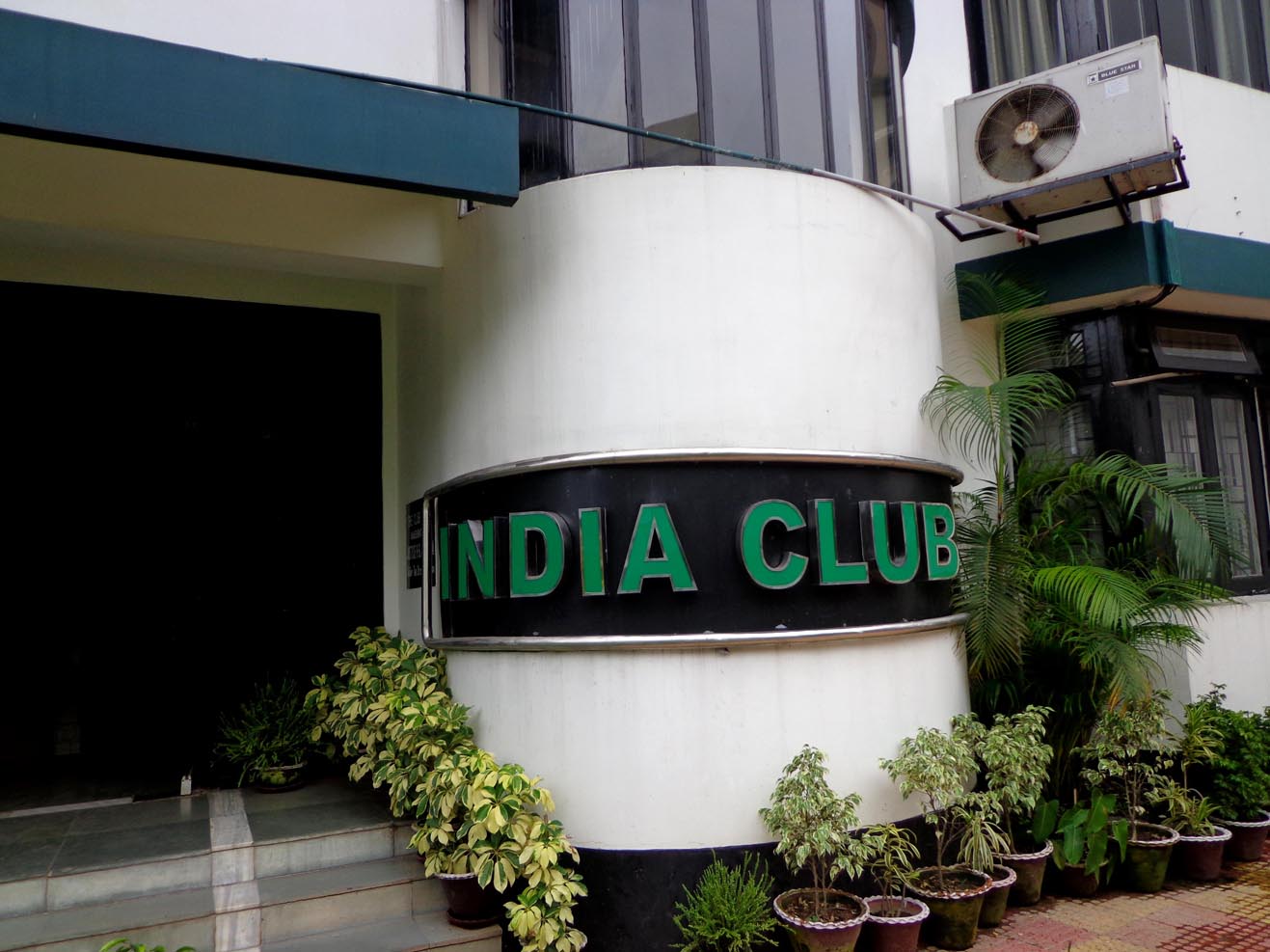
India Club was formed in the year 1933. The original name of the club is Indian Club. The name speaks the sentiment of an influential section of the local people. It is one of the oldest tennis clubs of the state. In 1938, Indian Club was rechristened into India Club. After independence, India Club rose from strength to strength and established itself as one of the prestigious clubs of the city. From a mere Assam-type house in the 1940s, it was transformed into a five storey building near the famous Dighalipukhuri. The club is now the hub of tennis activities in the State.
Club of Black Sahib
Some Anglo Indian people employed by the Railways, Telegraph and Steamer Company and based at Gauhati started a club before Independence at Panbazar Telegraph Office complex. It organised sporting activities among its members. In the evening, members participated in dance and exchange pleasantries among themselves. It also set up a tennis court. The club was known as the Club of Black Sahib. After some years, the club was disbanded and the Telegraph Department constructed a multistoried building on where the club had so proudly existed.
Union Club
In the last part of 19th century, an organisation named Ekata Sabha was formed. The Sabha emphasized physical culture and socio-cultural activities. After some years, Ekata Sabha started its sports wing which was known as Union Athletic Club in 1903. UAC started its journey through cricket, football and volleyball. In 1889, Manik Chandra Barua took an initiative and filled-up the Latasil Pukhuri tank and UAC started practicing there. It was in this fashion, the Latasil Field came into the history of Gauhati. UAC's journey abruptly ended before Independence.
Para Culture
Para culture or club culture got a tremendous boost after the Independence of India. Every para now has its own community club with a club room and often a playing field. Some prominent examples are Santipur Athletic Club, Young Amateur, Rising, Friends Union, Kohinoor Club, Rajbari Athletic Club, Dynamo, Navajyoti, Sunrise, Navarang, Ranibari, Young Union, Boys Union, West Gauhati Club, etc. Friends Union won the very first edition of Gauhati Football League. Kohinoor Club of Lakhtokia became the runners-up in the very first year. Para club has been adding value to Assam's social system in the true spirit. Even though club culture in United Kingdom is now a multi-million pound industry, Assam's club culture has its riches in the respect people have for players and administrators.